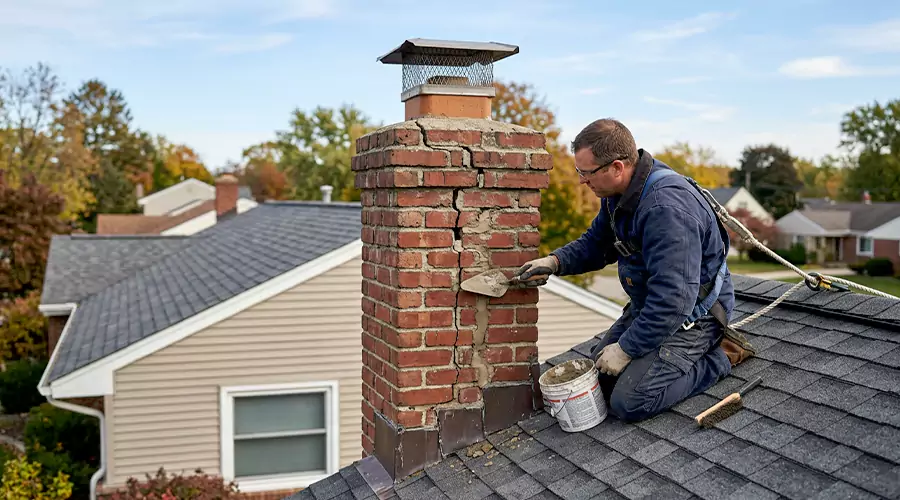
How to Fix Chimney Cracks
Identify chimney cracks and learn how to address minor masonry damage, weather exposure, moisture problems, and cracks that may require professional repair.




Based on 500+ Reviews

Proudly American
Owned & Operated

Chimney cracks should be repaired according to where they appear and how deep they extend. Small mortar-joint or crown cracks may be sealed or repointed, while cracked bricks, structural movement, or damaged flue liners can require professional masonry or liner work. Small exterior crack repairs typically cost about $150 to $500 in 2026.
The right way to fix chimney cracks is to identify the damaged component first. Covering every visible crack with caulk can hide deterioration without correcting the underlying problem.
Chimneys sit above the roof where they are continuously exposed to rain, wind, sunlight, and temperature changes. Over time, those conditions can weaken mortar and masonry.
Moisture is especially important. Water can penetrate small openings and contribute to further deterioration when temperatures change.
Common causes include:
Cracks can develop in several different components, so their location matters as much as their width.
Not all chimney cracks require the same repair.
| Crack Location | Common Problem | Typical Repair |
|---|---|---|
| Mortar joints | Weathered or missing mortar | Repointing |
| Brick faces | Cracking or spalling | Brick replacement |
| Chimney crown | Surface or structural cracks | Sealing, patching, or rebuilding |
| Flue liner | Cracked clay tiles | Liner repair or replacement |
| Entire chimney | Structural movement | Masonry evaluation or rebuilding |
A narrow surface crack in the crown is very different from a vertical crack running through several courses of brick.
Structural cracks should not simply be filled because movement may continue underneath the repair.
Chimney crack repair begins with removing loose material and determining whether the damage affects mortar, brick, crown material, or the flue. For deteriorated mortar joints, repointing is generally used. Old mortar is removed to sufficient depth before fresh compatible mortar is packed into the joint. Current masonry guidance from This Old House recommends removing deteriorated joint material deeply enough to expose brick surfaces so the replacement mortar can bond properly.
A typical exterior repair may involve:
The exact method changes according to the damaged component.
Yes. Some small surface cracks can be sealed when the surrounding masonry remains stable.
Hairline cracks in a chimney crown may accept an appropriate flexible repair product or elastomeric coating. Fine Homebuilding notes that smaller crown cracks and chips can often be repaired, while crumbling crowns or major structural cracks may require rebuilding.
A chimney crack filler should only be used for defects suited to that specific material.
Sealing is generally more appropriate when:
A deep crack should not be treated as a cosmetic opening.
Cracked mortar joints are commonly repaired through repointing. The deteriorated mortar is removed while sound bricks are left in place. The joints are cleaned before compatible replacement mortar is inserted. This approach restores the joint instead of placing a thin layer of mortar over failing material. Repointing typically costs about $500 to $2,500 in 2026, depending on the amount of masonry involved and accessibility. If several bricks are also deteriorated, chimney masonry repair may include replacing those units before repointing the surrounding joints.
A brick with a shallow surface defect may sometimes remain serviceable, but deeply cracked or badly spalled bricks often require replacement. The damaged brick is carefully removed without disturbing surrounding masonry. A compatible replacement is then installed with appropriate mortar.
Brick replacement becomes more important when:
Simply covering a severely damaged brick with mortar does not restore its original strength.
Crown cracks are common because the top of the chimney receives direct weather exposure. Small cracks can sometimes be patched and sealed. Larger cracks may require substantial repair, while a badly deteriorated crown may need replacement. Current 2026 estimates place minor crown repair around $200 to $700 or more, while complete crown replacement can cost approximately $1,000 to $3,000. The cause of the crown damage should also be considered. Poor drainage can allow water to remain on the surface and contribute to recurring deterioration.
Yes. A crack inside the flue should be treated differently from a small exterior mortar defect. The flue liner is part of the chimney's venting system. Cracked or damaged liner sections may not be visible from the fireplace opening. The Chimney Safety Institute of America specifically checks flue tiles for cracks during internal inspections. It advises against using a chimney after suspected chimney-fire damage until the system has been evaluated because structural cracking or joint failure may be hidden. Internal flue damage usually requires professional evaluation rather than a surface patch.
A cracked chimney repair cost depends heavily on the type of crack.
| Type of Repair | Typical 2026 Cost |
|---|---|
| Small exterior crack | $150 to $500 |
| Crown repair | $200 to $700+ |
| Repointing | $500 to $2,500 |
| Spalling brick repair | $1,000 to $3,500 |
| Partial chimney rebuild | $1,000 to $5,000+ |
| Liner replacement | $1,500 to $7,000 |
These ranges show why early diagnosis matters.
Professional evaluation is recommended when cracks appear structural or involve the flue.
Arrange an inspection when:
Roof-level work also creates fall hazards, so difficult-to-access repairs should not be treated as simple DIY projects.
Repairing the crack is only part of the solution. Moisture problems should also be corrected. Check the crown for damage, keep the chimney cap secure, and inspect flashing for openings. Use compatible mortar when repairing older masonry. Keep an eye on newly repaired joints for movement. Annual chimney inspections are also recommended for fireplaces and venting systems so developing defects can be identified before they become larger.
The best way to fix chimney cracks depends on whether the damage affects mortar, brick, the crown, or the flue liner. Small surface defects may need sealing or repointing, while deep structural cracks require more extensive repair.
Inspect visible masonry from the ground and photograph any cracks so you can see whether they are widening. Early repairs can prevent water from turning a small opening into a much larger masonry problem.
Yes, some small surface cracks can be filled or sealed. Deep or structural cracks require diagnosis before repair.
They can become serious when water enters the joints or the cracks continue spreading.
Minor defects may sometimes be repaired, but deeply cracked or badly spalled bricks often need replacement.
Small exterior crack repairs typically cost around $150 to $500 in 2026.
Yes. Cracks in mortar, brick, or the crown can provide paths for rainwater to enter the masonry.
A suspected cracked flue should be professionally evaluated before continued use, especially if the damage may have resulted from a chimney fire.
Identify chimney cracks and learn how to address minor masonry damage, weather exposure, moisture problems, and cracks that may require professional repair.
